Increasing Thigh Extension with Haptic Feedback Affects Leg Coordination in Young and Older Adult Walkers

Abstract
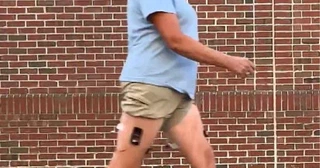
Interlimb coordination can be used as a metric to study the response of the neuromuscular system to mechanical perturbations and behavioral information. Behavioral information providing haptic feedback on thigh angle has been shown to increase stride length and consequently walking speed, but the effect of such feedback on limb coordination has not been determined. The current work investigates the effects of this feedback on lower-limb coordination and examines if such effects are dependent on the age of the walker. Existing kinematic data were examined from 10 young and 10 older adults during overground walking at self-selected normal and fast speeds and with thigh extension haptic feedback. Using sagittal angles of the lower-limb segments, we quantified changes in the mean of continuous relative phase (ACRP) and its standard deviation (VCRP) for thigh-shank and shank-foot segment pairs, over windows of 10% of gait cycle around peak thigh extension, toe-off, and heel strike. We found that the haptic feedback resulted in more in-phase movement (i.e., decreased ACRP, Cohen’s d: 0.56-1.46), and larger coordination variability (i.e., increased VCRP, Cohen’s d: 0.60-1.50) of the segment pairs across the three windows. Additionally, the young adults exhibited lower ACRP than older adults (Cohen’s d = 1.02) and higher VCRP (Cohen’s d = 1.02) when the feedback was provided. The results suggest that the haptic feedback elicited distinct adaptations in the neuromuscular system and that this response differed between young and older adults.
Type
Publication
Journal of Biomechanics, 181, 112525
Status
Peer-reviewed

Authors
PhD Candidate in Mechanical Engineering
PhD candidate in Mechanical Engineering at the University of Maine. Focused on intelligent wearable systems that combine biomechanics, IMU-based sensing, machine learning, and real-time mobile applications for human movement analysis, gait assessment, activity recognition, and digital health.